


DeltaQuad ha lanzado el Evo-LE, una nueva aeronave no tripulada VTOL de ala fija eléctrica y gran autonomía diseñada para misiones donde la cobertura aérea persistente es más importante que la máxima flexibilidad de carga útil. Anunciado el 22 de septiembre de 2026, el Evo-LE extiende la plataforma Evo de la compañía holandesa hacia una configuración dedicada de larga autonomía; DeltaQuad declara un tiempo máximo de vuelo de hasta ocho horas, un alcance de radio máximo de 120 km y una capacidad de carga útil de hasta 1,5 kg.
El lanzamiento es significativo porque el Evo-LE no es simplemente un UAV convencional de ala fija con una batería más grande. DeltaQuad afirma que la aeronave combina una arquitectura de batería dual, tecnología de batería de mayor densidad energética, una arquitectura eléctrica rediseñada y un tren motriz VTOL mejorado para lograr la mayor autonomía. El resultado es una plataforma destinada a ISTAR, vigilancia fronteriza, retransmisión de comunicaciones y otras misiones que requieren un tiempo prolongado sobre un área de interés.
El anuncio también llega en un momento en que las aeronaves VTOL de larga autonomía se están volviendo cada vez más relevantes para el desarrollo más amplio del Informe de la Industria de Drones de septiembre de 2026 | IA, BVLOS y Tendencias, particularmente a medida que el vuelo autónomo, las operaciones BVLOS, las baterías avanzadas y la detección aérea persistente continúan convergiendo.
Opinión de MidronePro: El DeltaQuad Evo-LE es importante, menos por una especificación destacada que por el hecho de ilustrar hacia dónde se dirige el desarrollo profesional de UAV VTOL: mayor autonomía, mayor alcance operativo, navegación resistente, comunicaciones seguras e integración de carga útil específica para la misión dentro de una única aeronave desplegable en campo.
El desarrollo clave es el enfoque de ingeniería detrás de la afirmación sobre la autonomía. DeltaQuad dice que rediseñó varias partes de la aeronave en lugar de simplemente aumentar la capacidad de la batería. Eso hace que el Evo-LE sea un ejemplo interesante de cómo los UAV eléctricos de larga autonomía están evolucionando de aeronaves individuales a plataformas persistentes de detección y comunicaciones.
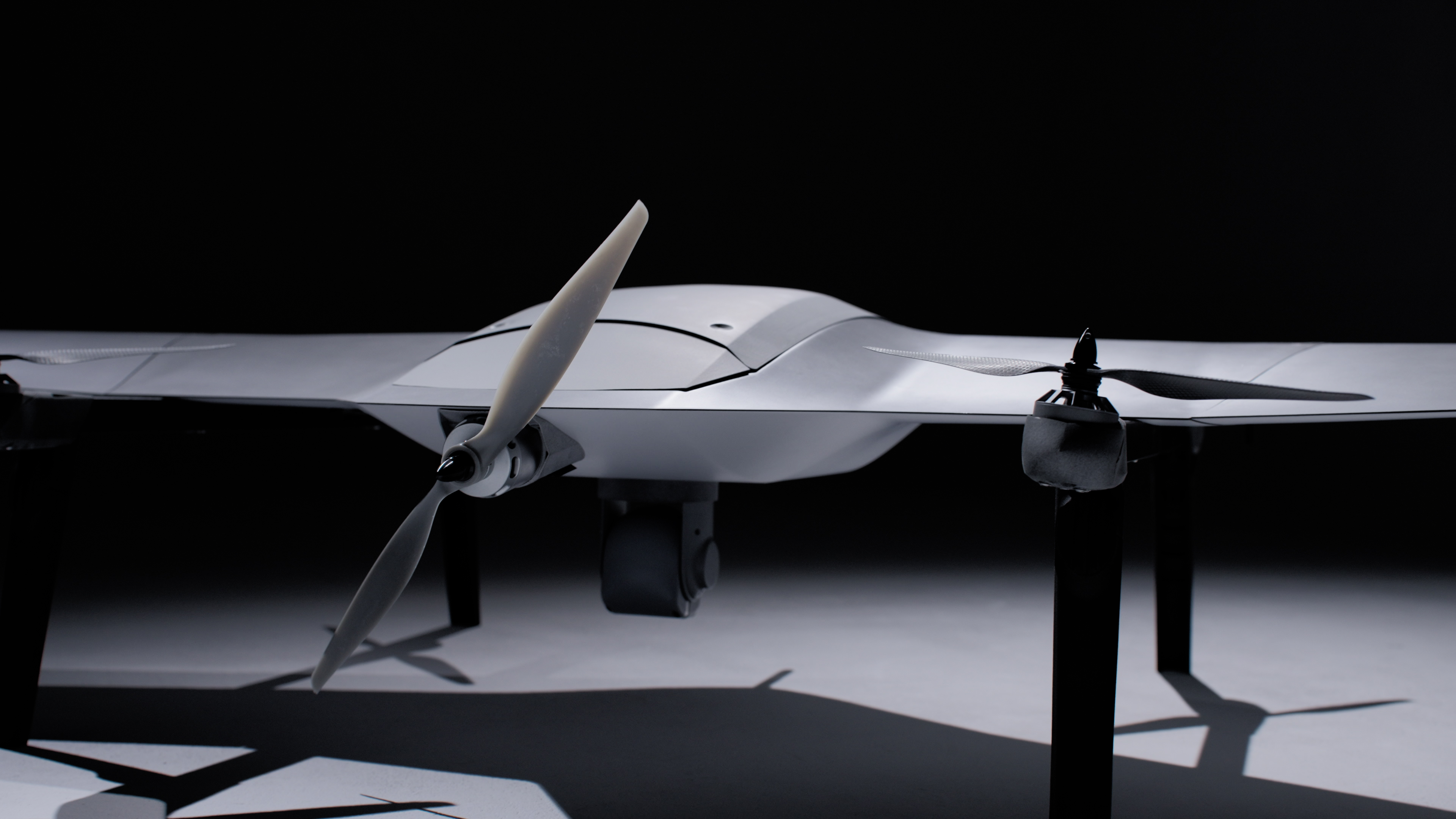
Imágenes oficiales de DeltaQuad. Fuente: Información del producto DeltaQuad Evo-LE.
DeltaQuad lanza el Evo-LE
DeltaQuad anunció el Evo-LE el 22 de septiembre de 2026, presentándolo como una versión de larga autonomía de la plataforma VTOL de ala fija eléctrica de la compañía.
Según DeltaQuad, la aeronave ha sido desarrollada para misiones de defensa y seguridad, y está destinada a apoyar operaciones de inteligencia, vigilancia, adquisición de objetivos y reconocimiento (ISTAR), vigilancia fronteriza y retransmisión de comunicaciones.
La compañía dice que la aeronave fue desarrollada utilizando los comentarios de los operadores de primera línea y las lecciones de miles de horas de vuelo operativo. Ese posicionamiento es importante porque el Evo-LE se está presentando como un desarrollo orientado a la misión en lugar de ser simplemente otra aeronave experimental de larga autonomía.
DeltaQuad declara que la plataforma está disponible para pedidos, con formación para operadores, asistencia en campo y servicios de ciclo de vida proporcionados como parte de la oferta.
El anuncio oficial de la compañía está disponible a través de la sala de prensa de DeltaQuad.
¿Qué es el DeltaQuad Evo-LE?
El Evo-LE es un UAV de despegue y aterrizaje vertical de ala fija eléctrica. Esa combinación le otorga dos características que normalmente implican un compromiso.
Su configuración de ala fija está diseñada para un vuelo eficiente hacia adelante y una autonomía extendida, mientras que su capacidad VTOL permite que la aeronave despegue y aterrice sin necesidad de una pista convencional.
DeltaQuad describe al Evo-LE como parte de su familia Evo y afirma que utiliza la misma estructura Block 3 que la plataforma Evo existente. La diferencia es la prioridad de la misión: el Evo estándar está configurado en torno a la flexibilidad de carga útil, mientras que el Evo-LE está optimizado específicamente para la autonomía.
Esto hace que la aeronave sea particularmente relevante para misiones donde reubicar un sitio de lanzamiento o reemplazar repetidamente las aeronaves reduciría la continuidad operativa.
Especificaciones clave del DeltaQuad Evo-LE
| Especificación | DeltaQuad Evo-LE |
|---|---|
| Tiempo máximo de vuelo | Hasta 8 horas |
| Alcance máximo de vuelo | Hasta 480 km |
| Alcance máximo de radio | Hasta 120 km |
| Peso máximo de despegue | 13 kg |
| Capacidad de carga útil | Hasta 1,5 kg |
| Configuración | VTOL de ala fija eléctrica |
| Arquitectura de batería | Batería dual |
| Navegación | GNSS antijamming CRPA con navegación visual opcional |
| Clasificación ambiental | IP54 |
| Temperatura de operación | -20°C a +45°C |
DeltaQuad enfatiza que la autonomía y el alcance reales dependen de factores que incluyen la configuración de la carga útil, el perfil de la misión y las condiciones operativas. Por lo tanto, las cifras principales de ocho horas y 480 km deben entenderse como especificaciones máximas publicadas y no como un rendimiento garantizado en cada escenario operativo.
Cómo el Evo-LE alcanza ocho horas de autonomía
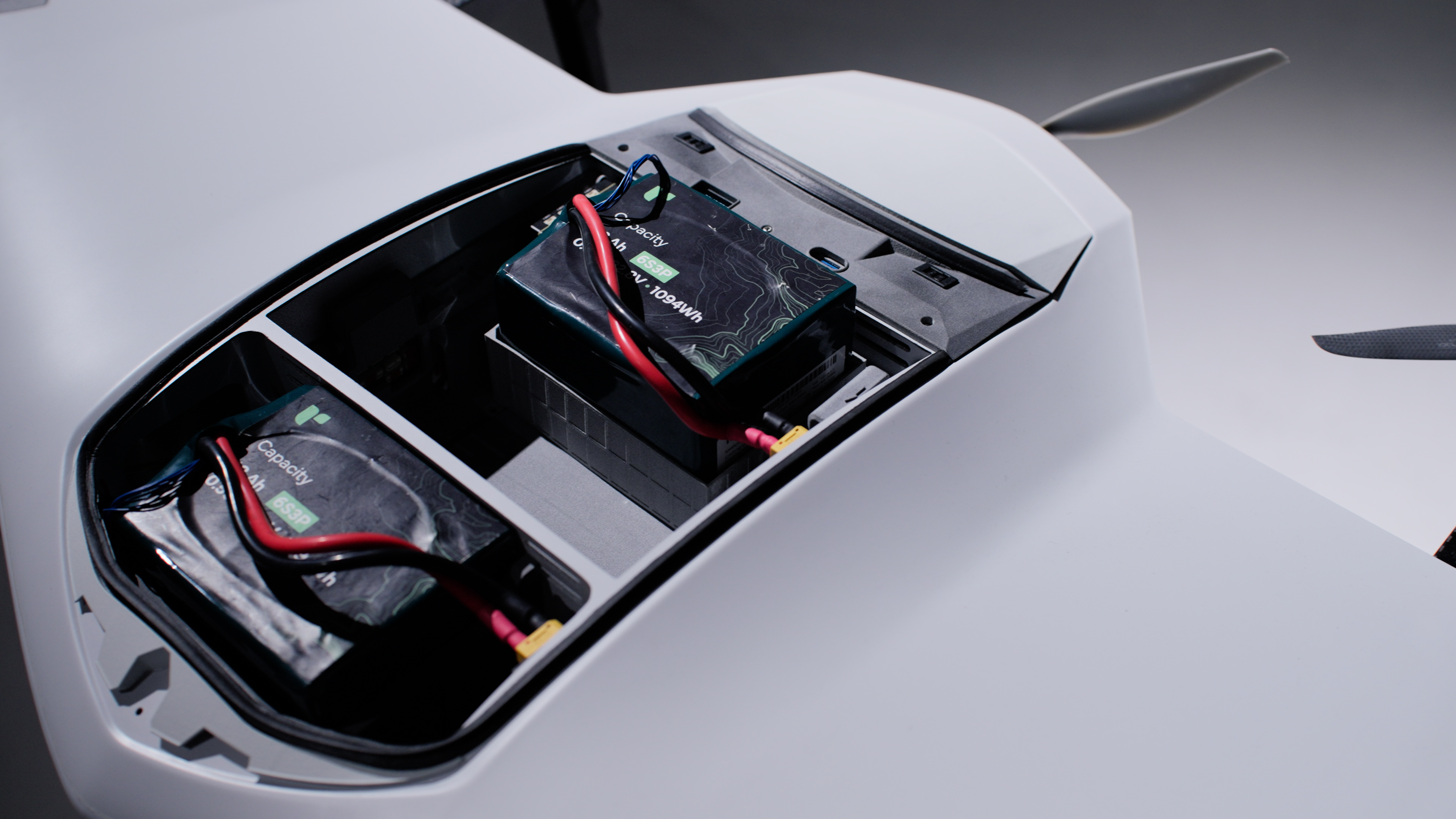
El aspecto técnico más interesante del lanzamiento es que DeltaQuad no atribuye la cifra de ocho horas de autonomía únicamente a la capacidad de la batería.
La compañía dice que el Evo-LE combina:
- Arquitectura de batería dual
- Tecnología de batería de mayor densidad energética
- Arquitectura eléctrica rediseñada
- Tren motriz VTOL mejorado
- Cambios en la aeronave diseñados para misiones más largas
Este enfoque es importante porque aumentar la capacidad de la batería puede introducir peso adicional, lo que a su vez aumenta la energía necesaria para mantener la aeronave en el aire. Por lo tanto, las aeronaves eléctricas de larga autonomía requieren una optimización en la propulsión, la aerodinámica, los sistemas eléctricos y el almacenamiento de energía en lugar de simplemente añadir baterías más grandes.
El equipo de producto de DeltaQuad declara específicamente que alcanzar el objetivo de autonomía requirió cambios en toda la plataforma.
Esa filosofía de ingeniería es coherente con una tendencia industrial más amplia hacia baterías de mayor densidad energética como un facilitador importante de misiones de UAV autónomas de mayor duración.
Por qué el VTOL sigue siendo importante para los UAV de larga autonomía
Las aeronaves de ala fija generalmente ofrecen una ventaja de autonomía sobre las de tipo multirrotor porque sus alas generan sustentación de manera eficiente durante el vuelo hacia adelante. El problema es el despliegue: una aeronave convencional de ala fija normalmente requiere una pista, un sistema de lanzamiento o un área de recuperación.
El VTOL elimina gran parte de esos requisitos de infraestructura.
Para el Evo-LE, la aeronave puede realizar la transición desde el despegue y aterrizaje vertical hacia el vuelo de ala fija. Esto permite que la plataforma combine un despliegue independiente de pista con la eficiencia de una estructura de ala fija durante la misión principal.
Eso es particularmente relevante en áreas remotas, ubicaciones operativas temporales y entornos donde construir o asegurar una pista es poco práctico.
También explica por qué las plataformas VTOL de larga autonomía se están convirtiendo en una categoría importante dentro del desarrollo profesional de UAV en lugar de simplemente competir con las aeronaves de ala fija convencionales.
Alcance de vuelo de 480 km y alcance de radio de 120 km
DeltaQuad publica un alcance de vuelo máximo de 480 km para el Evo-LE, mientras que el alcance de radio máximo se especifica en 120 km.
Estas son dos medidas diferentes.
El alcance de vuelo describe la distancia potencial que la aeronave puede cubrir bajo condiciones específicas. El alcance de radio describe el máximo alcance de comunicación establecido del sistema de radio de la aeronave.
La diferencia es importante al interpretar las especificaciones de UAV de largo alcance. Una plataforma puede teóricamente cubrir una distancia muy grande mientras que la arquitectura de comando y control tiene un alcance de radio directo más corto, dependiendo de la configuración de comunicaciones y el concepto operativo.
Por esta razón, el Evo-LE debe entenderse como una plataforma de larga autonomía cuyo radio de misión real y concepto operativo dependen de la arquitectura de comunicaciones, las restricciones regulatorias, la carga útil, la planificación de rutas y las condiciones ambientales.
Para obtener un contexto más amplio sobre las operaciones comerciales de UAV de larga distancia, consulte Drones BVLOS en 2026: Guía completa para operaciones fuera de la línea de visión.
Carga útil y NextVision Raptor 360
El Evo-LE tiene una capacidad de carga útil publicada de hasta 1,5 kg. DeltaQuad identifica actualmente el NextVision Raptor 360 como la carga útil disponible para la plataforma.
El Raptor 360 combina imágenes visibles y térmicas estabilizadas para vigilancia y seguimiento de largo alcance. La documentación de la carga útil de DeltaQuad describe una rotación continua de 360 grados, configuraciones de cámara visible con zoom óptico y digital, y un sistema térmico de 1280 × 720.
Por lo tanto, la carga útil le da al Evo-LE una capacidad que va más allá de simplemente mantener una aeronave en el aire durante ocho horas. El objetivo es convertir la autonomía en una cobertura persistente de sensores.
Esta es una distinción importante en los sistemas profesionales de UAV: la autonomía tiene valor cuando la aeronave puede usar ese tiempo adicional para recopilar información significativa.
Antijamming y navegación resistente
DeltaQuad afirma que el Evo-LE puede configurarse con un sistema GNSS antijamming CRPA de 4/8 matrices y un sistema de navegación visual opcional para situaciones en las que la navegación por satélite se ve interrumpida.
La tecnología CRPA, o antena de patrón de recepción controlada, está diseñada para mejorar la resiliencia del GNSS contra la interferencia. La capacidad de navegación visual opcional proporciona otra entrada de navegación en lugar de depender exclusivamente del posicionamiento por satélite.
Esto es especialmente relevante para las operaciones profesionales de UAV porque la resiliencia de la navegación se trata cada vez más como parte de la arquitectura general de la misión de la aeronave.
El punto importante es que DeltaQuad presenta estas capacidades como opciones configurables en lugar de sugerir que cada configuración de Evo-LE incluya necesariamente todas las características de resiliencia.
Comunicaciones seguras e integración táctica
El Evo-LE también se puede configurar con opciones de comunicaciones seguras. DeltaQuad enumera radios de malla y de banda ancha de matriz en fase entre sus opciones de comunicación y declara que el cifrado AES-256 está disponible en configuraciones seleccionadas.
La aeronave también está construida en torno a la aviónica Auterion Tactical Stack, con una configuración de control en tierra reforzada destinada al despliegue en campo.
Esto refleja un cambio más amplio en el desarrollo profesional de drones. Los clientes empresariales y de defensa evalúan cada vez más los UAV como sistemas completos en lugar de como aeronaves solas.
La aeronave, la carga útil, la navegación, la radio, el equipo de control en tierra y el software contribuyen a la capacidad operativa.
Aplicaciones de misión
DeltaQuad identifica varios escenarios de misión para el Evo-LE donde la larga autonomía puede afectar directamente a la continuidad operativa.
ISTAR
Las misiones de inteligencia, vigilancia, adquisición de objetivos y reconocimiento pueden beneficiarse de ventanas de observación más largas. En lugar de regresar o rotar las aeronaves con tanta frecuencia, una plataforma de mayor autonomía puede permanecer disponible sobre un área de interés durante un período prolongado.
Vigilancia fronteriza
Grandes áreas geográficas pueden ser difíciles de monitorear continuamente utilizando aeronaves de corta autonomía. Una plataforma con un tiempo máximo de vuelo de ocho horas puede potencialmente reducir el número de rotaciones de aeronaves necesarias para la observación persistente, sujeto a la configuración operativa y las regulaciones aplicables.
Retransmisión de comunicaciones
Un UAV puede posicionarse como una retransmisión de comunicaciones aérea cuando el terreno o la distancia dificultan la comunicación directa entre los elementos terrestres. Una mayor autonomía puede reducir la frecuencia con la que se debe reemplazar la plataforma de retransmisión aérea.
Búsqueda y rescate
Las operaciones de búsqueda y rescate pueden involucrar grandes áreas y un acceso terrestre limitado. DeltaQuad identifica específicamente la búsqueda y rescate como un escenario de misión del Evo-LE, donde el tiempo extendido en el aire puede proporcionar a los equipos una ventana de búsqueda más larga.
Evo vs Evo-LE
DeltaQuad posiciona al Evo y al Evo-LE como plataformas relacionadas con diferentes prioridades en lugar de aeronaves idénticas con nombres diferentes.
| Característica | DeltaQuad Evo | DeltaQuad Evo-LE |
|---|---|---|
| Prioridad principal | Flexibilidad de carga útil | Autonomía |
| Estructura | Block 3 | Block 3 |
| Configuración de batería | Batería única o dual | Batería dual |
La distinción es sencilla: el Evo-LE sacrifica algo de flexibilidad de carga útil a cambio de una configuración optimizada para la autonomía.
Este es un ejemplo útil de cómo las plataformas UAV profesionales se diseñan cada vez más en torno a los requisitos de la misión, en lugar de intentar maximizar todas las especificaciones simultáneamente.
El fuselaje Block 3
El Evo-LE utiliza el fuselaje Block 3 de DeltaQuad, el cual también es utilizado por la plataforma Evo actual.
DeltaQuad describe la aeronave como una estructura reforzada con materiales compuestos rediseñados, protección mejorada contra la entrada de agua y mejor rendimiento bajo la lluvia. La plataforma también incorpora un tubo pitot calefactado, luces de navegación y luces anticolisión.
Los trenes de aterrizaje están diseñados para desprenderse durante un aterrizaje forzoso para ayudar a proteger el fuselaje.
La empresa especifica un grado de protección ambiental IP54 y un rango de temperatura operativa de -20°C a +45°C.
Estas características refuerzan el papel previsto del Evo-LE como un UAV profesional desplegable en campo, en lugar de un dron de consumo.
Por qué el Evo-LE es importante para la industria de los drones
El lanzamiento del Evo-LE refleja varias tendencias más amplias que actualmente moldean el desarrollo de los UAV profesionales.
1. La autonomía se está convirtiendo en una capacidad operativa
Un mayor tiempo de vuelo no es simplemente una ventaja en las especificaciones. Puede cambiar la forma en que se organizan las misiones.
Una aeronave capaz de permanecer en el aire durante periodos sustancialmente más largos puede reducir las necesidades de rotación de aeronaves, ampliar las ventanas de observación y potencialmente reducir las interrupciones en misiones persistentes.
2. El VTOL está ampliando el campo de despliegue
La eficiencia de un ala fija combinada con el despegue y aterrizaje vertical sigue siendo una de las arquitecturas más útiles para los UAV profesionales que operan sin infraestructura de pista convencional.
3. Las baterías se están convirtiendo en una tecnología estratégica
El desarrollo del Evo-LE también resalta la importancia de la densidad energética. El enfoque de DeltaQuad demuestra que la tecnología de las baterías debe considerarse junto con la arquitectura eléctrica y la eficiencia de la propulsión.
4. Los UAV se están convirtiendo en plataformas de sensores
La aeronave en sí es solo una parte del sistema. La carga útil, las comunicaciones, la navegación y el software determinan qué información operativa puede proporcionar realmente la aeronave.
5. La resiliencia se está convirtiendo en parte del diseño
La navegación anti-interferencias, la navegación visual opcional y las comunicaciones seguras indican que los clientes profesionales esperan cada vez más que los sistemas UAV operen en entornos donde la conectividad y el posicionamiento no pueden darse por sentados.
Estas tendencias están estrechamente relacionadas con el desarrollo más amplio de la Guía de drones autónomos, IA, BVLOS y Drone-in-a-Box.
Lo que no nos dicen las especificaciones publicadas
La cifra de ocho horas es significativa, pero las especificaciones máximas publicadas no ofrecen una imagen completa del rendimiento real en las misiones.
La autonomía real puede variar según:
- El peso de la carga útil
- Las condiciones del viento
- La altitud de vuelo
- El perfil de vuelo
- El estado de la batería
- Los requisitos energéticos del VTOL
- La configuración de las comunicaciones
- Las condiciones ambientales
El mismo principio se aplica al rango de vuelo publicado de 480 km y al alcance de radio de 120 km. Esas cifras no deben interpretarse como garantías operativas universales.
Otra distinción importante es la que existe entre la capacidad técnica y la autorización reglamentaria. Un UAV puede tener la autonomía y la tecnología de comunicaciones necesarias para una operación de largo alcance, pero aun así requerir la aprobación reglamentaria adecuada, coordinación del espacio aéreo, evaluación de riesgos operativos y otras salvaguardias.
Para los operadores europeos, esto hace que la relación entre la tecnología avanzada de UAV y el marco reglamentario sea particularmente importante. Nuestra Reglamento de drones de la UE 2026: Guía completa para operadores de drones proporciona un contexto reglamentario más amplio.
Análisis de MidronePro
El DeltaQuad Evo-LE destaca porque aborda la autonomía como un problema completo de diseño de la aeronave, más que como un problema de capacidad de la batería.
El titular de las ocho horas atraerá naturalmente la atención, pero el avance más significativo podría ser la integración de alimentación de batería dual, almacenamiento de mayor densidad energética, arquitectura eléctrica rediseñada, propulsión VTOL mejorada, navegación resistente, comunicaciones seguras y cargas útiles específicas para la misión.
Esta combinación ilustra cómo está evolucionando el mercado de los UAV profesionales.
Los drones de consumo a menudo se evalúan en función de la calidad de la cámara, el tiempo de vuelo, la detección de obstáculos y la portabilidad. Los UAV profesionales deben ser evaluados cada vez más como sistemas integrados capaces de respaldar un flujo de trabajo operativo específico.
Por lo tanto, el Evo-LE es parte de una transición más amplia desde el dron como aeronave hacia el dron como infraestructura persistente.
Esa transición es particularmente visible cuando la larga autonomía se combina con la capacidad BVLOS, navegación autónoma, supervisión remota, sensores avanzados y comunicaciones seguras.
Es también por lo que las plataformas de larga autonomía no deberían evaluarse puramente preguntando cuántas horas pueden permanecer en el aire. Las preguntas más importantes son qué información pueden recopilar, con qué fiabilidad pueden permanecer conectados, cuán resistente es su navegación, qué cargas útiles pueden transportar y cómo encaja todo el sistema en un marco operativo legal y seguro.
El Evo-LE de DeltaQuad proporciona un claro ejemplo de esa dirección en 2026.
Más información en MidronePro Academy
El lanzamiento del Evo-LE conecta directamente con varias áreas de tecnología de drones profesionales cubiertas en MidronePro:
- Guía de drones autónomos, IA, BVLOS y Drone-in-a-Box — Explore cómo convergen las aeronaves autónomas, la IA, las operaciones BVLOS y la infraestructura de drones.
- Tecnología de detección y evasión para BVLOS: Guía completa 2026 — Comprenda las tecnologías de detección y riesgo aéreo que respaldan las operaciones BVLOS cada vez más avanzadas.
- Inspección de drones con IA: Guía completa para inspecciones con drones impulsadas por IA — Vea cómo la IA, los sensores avanzados y el análisis automatizado están cambiando los flujos de trabajo de inspección profesional.
- Guía de mapeo con drones: Fotogrametría, mapeo 3D y topografía aérea — Aprenda cómo los UAV profesionales convierten los datos aéreos en mapas, modelos 3D e información geoespacial.
- Tecnología de enjambres de drones: Guía completa de enjambres de drones autónomos en 2026 — Explore la siguiente etapa de las aeronaves autónomas coordinadas.
- Reglamento de drones de la UE 2026: Guía completa para operadores de drones — Comprenda el entorno regulatorio europeo en torno a las operaciones avanzadas de UAS.
- Informe de la industria de drones septiembre 2026 | IA, BVLOS y tendencias — Siga los desarrollos más amplios de septiembre de 2026 que moldean la tecnología comercial y profesional de los UAV.
Preguntas frecuentes
¿Qué es el DeltaQuad Evo-LE?
El DeltaQuad Evo-LE es un UAV de ala fija VTOL totalmente eléctrico diseñado para misiones de larga autonomía. DeltaQuad lo posiciona para aplicaciones de ISTAR, vigilancia fronteriza y retransmisión de comunicaciones.
¿Cuánto tiempo puede volar el DeltaQuad Evo-LE?
DeltaQuad publica un tiempo máximo de vuelo de hasta ocho horas. La autonomía real depende de la configuración de la carga útil, el perfil de la misión y las condiciones operativas.
¿Cuál es el alcance del DeltaQuad Evo-LE?
DeltaQuad publica un alcance de vuelo máximo de hasta 480 km y un alcance de radio máximo de hasta 120 km. Son especificaciones diferentes y no deben interpretarse como la misma medida.
¿Cuánta carga útil puede transportar el Evo-LE?
DeltaQuad enumera una capacidad de carga útil máxima de 1,5 kg para el Evo-LE.
¿Qué carga útil utiliza el DeltaQuad Evo-LE?
Actualmente, DeltaQuad identifica la NextVision Raptor 360 como la carga útil disponible para el Evo-LE. Combina imágenes estabilizadas RGB y térmicas para vigilancia y seguimiento de largo alcance.
¿El Evo-LE utiliza GPS?
El Evo-LE puede configurarse con un sistema GNSS anti-interferencias CRPA de 4/8 antenas. DeltaQuad también enumera un sistema de navegación visual opcional para operaciones donde la navegación por satélite se ve interrumpida.
¿El DeltaQuad Evo-LE tiene comunicaciones seguras?
Sí. DeltaQuad enumera opciones de comunicación segura que incluyen radios de banda ancha en malla (mesh) y de matriz en fase (phased-array), con cifrado AES-256 disponible en configuraciones seleccionadas.
¿Es el DeltaQuad Evo-LE un dron VTOL?
Sí. El Evo-LE es una aeronave eléctrica VTOL de ala fija, que combina el despegue y aterrizaje vertical con el vuelo de avance de ala fija.
¿Cuál es la diferencia entre el DeltaQuad Evo y el Evo-LE?
DeltaQuad dice que el Evo estándar está configurado en torno a la máxima flexibilidad de carga útil, mientras que el Evo-LE utiliza una configuración de batería dual y está optimizado para misiones donde la autonomía es el requisito principal.
¿Por qué es importante el DeltaQuad Evo-LE?
El Evo-LE ilustra el creciente énfasis en las operaciones aéreas persistentes. Su combinación de larga autonomía, despliegue VTOL, cargas útiles específicas para misiones, navegación resistente y comunicaciones configurables refleja el movimiento general hacia sistemas UAV profesionales integrados.


